
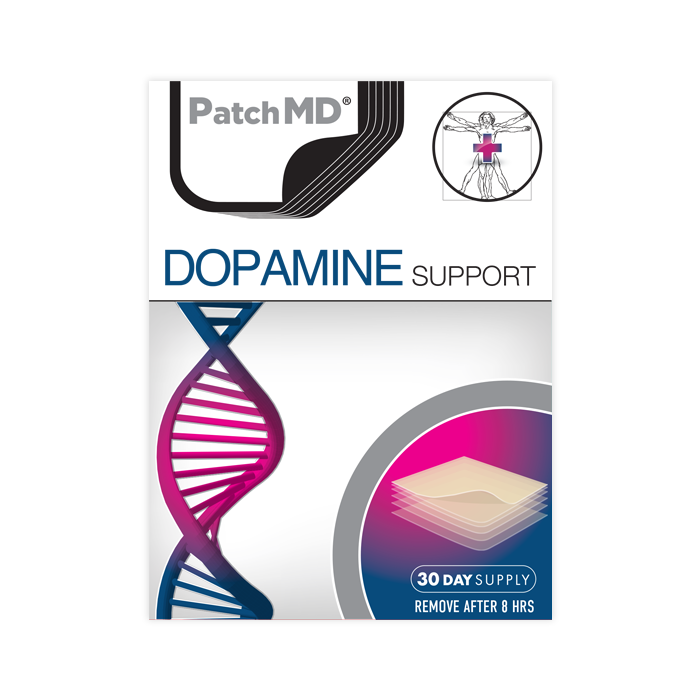
Dopamine plays an important role in motivation, attention, learning, movement, and reward. Because of this, interest in dopamine support has grown quickly. One product category attracting attention is dopamine patches.
In addition, these wearable products support several goals. Depending on the formula, they may support focus, motivation, mood, energy, or mental wellness.
However, there is an important distinction to make. Most consumer dopamine patches do not contain dopamine itself. Instead, they may contain nutrients or botanical ingredients associated with dopamine production or related brain pathways.
There is also a major difference between a wellness patch and a prescription medication patch that affects dopamine receptors. So, do dopamine patches work? The answer depends on the ingredients, formulation, delivery method, and quality of the evidence behind the finished product.
For example, this guide explains how dopamine patches work, what they contain, their potential uses, safety considerations, and what research can—and cannot—tell us about their effectiveness.
What Are Dopamine Patches?
However, dopamine patches are wearable products designed to deliver selected ingredients through or onto the skin.
Many consumer formulas contain nutritional or botanical ingredients associated with mood, focus, motivation, or cognitive support. However, formulas can vary considerably between products.
The name can therefore create some confusion. A typical wellness dopamine patch does not simply put dopamine into the body. Instead, its ingredients may support pathways involved in dopamine production or other aspects of brain function.
Therefore, that distinction matters. Dopamine is a neurotransmitter produced and regulated through complex biological pathways. Simply applying an ingredient to the skin does not guarantee that it will reach the bloodstream in a useful amount.
The skin also creates a significant challenge. Its outer layer acts as a protective barrier. As a result, not every compound can pass through it efficiently. Research on transdermal nutritional products shows that delivery depends on factors such as molecular size, formulation, skin permeability, and delivery technology.
Therefore, the existence of a patch does not automatically prove better absorption.
What Ingredients Are Found in Dopamine Patches?
Meanwhile, there is no universal formula for dopamine patches. Different products use different ingredients and amounts. Some formulas contain ingredients such as Mucuna pruriens, 5-HTP, Lion’s Mane, Rhodiola, or other nutritional compounds.
However, these ingredients do not all have the same biological role.
Mucuna Pruriens
In contrast, mucuna pruriens is a plant that naturally contains L-DOPA, a precursor involved in dopamine production. This makes it especially relevant to products marketed around dopamine support.
However, research involving an ingredient does not establish that a Mucuna-containing topical patch will produce the same effects. The dose and delivery route can change how much of a compound becomes available to the body.
Recent research on Mucuna also shows why careful interpretation matters. Researchers continue to study its potential uses, but high-quality clinical evidence remains limited.
5-HTP
5-HTP some wellness formulas also contain 5-HTP. However, it should not be described as a dopamine precursor.
5-HTP is primarily involved in serotonin production. Some products include it because mood and neurotransmitter pathways are interconnected. Still, its presence does not mean that a patch directly increases dopamine.
People who take medicines that affect serotonin should also consider possible interactions before using products containing 5-HTP.
Lion’s Mane
As a result, lion’s Mane mushroom appears in some products designed around cognitive wellness. Research has explored Lion’s Mane in areas related to cognition and neurological health.
However, evidence for an oral mushroom preparation does not automatically establish the effectiveness of a topical patch. The same principle applies to other ingredients.
Rhodiola
More importantly, rhodiola is traditionally used in products aimed at stress, fatigue, and mental performance. For that reason, manufacturers may include it in formulas marketed for motivation or daily mental wellness.
Again, the key question is not simply whether an ingredient has research. Instead, ask whether researchers have studied the specific ingredient, dose, formulation, and delivery method together.
What Are the Potential Benefits of Dopamine Patches?
Similarly, dopamine patches are commonly marketed around several wellness goals, including focus, motivation, mental clarity, mood support, energy, and stress management.
However, these should be considered potential uses rather than established benefits of every dopamine patch.
Focus and Mental Clarity
For this reason, dopamine is involved in attention, learning, motivation, and reward-related processes. That connection helps explain why dopamine-support products often target focus.
However, a biological role does not prove that a consumer patch will improve concentration. The finished product needs appropriate evidence before researchers can establish a specific benefit.
Motivation and Drive
Dopamine participates in reward and motivation pathways. Consequently, dopamine-support products often appeal to people who want more motivation or mental drive.
Yet motivation depends on many factors. Sleep, stress, physical activity, diet, mental health, and daily routines can all affect how motivated and alert someone feels.
Therefore, low motivation should not automatically indicate low dopamine.
Mood Support
Some dopamine patches companies market for emotional balance and mood. Dopamine does play a role in reward and emotional processing. However, mood depends on multiple neurotransmitters and brain systems.
At the same time, for that reason, a wellness dopamine patch should not replace evaluation or treatment for depression, anxiety, or another mental health condition.
Energy and Daily Alertness
Dopamine contributes to motivation and reward-related behavior. Therefore, dopamine-focused products sometimes target energy and productivity.
However, fatigue has many possible causes. Poor sleep, stress, nutritional deficiencies, illness, medication, and other health factors can all contribute to low energy.
Overall, a dopamine patch should not be used to diagnose the cause of persistent fatigue.
How Do Dopamine Patches Work?
In addition, the basic concept behind a transdermal patch is straightforward. An active ingredient sits in a patch and touches the skin. The intended goal is for that ingredient to move across the skin barrier and become available to the body.
In practice, the process is more complicated. The outermost layer of skin protects the body from the outside environment. Consequently, many compounds cannot cross it efficiently.
For example, molecular size, chemical properties, concentration, formulation, contact time, and skin condition can all influence absorption.
However, some transdermal technologies use additional approaches to improve delivery. These can include penetration enhancers, microneedles, iontophoresis, or other methods that help overcome the skin barrier.
Therefore, this creates an important point for consumers: a patch is a delivery format, not proof of effectiveness.
Meanwhile, if researchers study an ingredient as an oral supplement, that research does not automatically prove that the ingredient works when applied through the skin.
Do Dopamine Patches Actually Work?
In contrast, this is one of the most important questions to ask. The honest answer is that effectiveness depends on the individual product and its formulation.
As a result, there is a major difference between evidence for an ingredient and evidence for a finished patch.
For example, an ingredient may have promising research when taken orally. However, that does not prove that the same ingredient crosses the skin effectively.
Likewise, laboratory or animal findings do not automatically establish a benefit in humans.
When evaluating dopamine patches, consider several questions:
- What ingredients does the patch contain?
- How much of each ingredient does it provide?
- Has the ingredient been studied through the skin?
- Has the finished patch been tested in humans?
- Were the studies controlled?
- Did researchers measure meaningful outcomes?
- Did the research use the same dose and delivery method?
More importantly, these questions provide a stronger basis for judging a product than the word “dopamine” on the packaging.
Dopamine Patches vs. Oral Supplements
Dopamine patches and oral supplements use different delivery routes. An oral supplement passes through the digestive system, while a patch attempts to deliver ingredients through the skin.
Neither format is automatically superior.
The format alone does not determine the result. Instead, consider the ingredient, dose, formulation, quality, and human evidence.
Dopamine Patches vs. Prescription Dopamine Patches
Similarly, this distinction deserves special attention. A consumer wellness dopamine patch should not be confused with a prescription medicine that acts directly on dopamine receptors.
For example, Neupro contains rotigotine, a prescription dopamine agonist delivered through the skin. It is used for Parkinson’s disease and moderate-to-severe primary restless legs syndrome.
Rotigotine works differently from nutritional dopamine-support products. Rather than supplying a nutritional precursor, it acts directly on dopamine receptors. It is therefore a pharmaceutical treatment, not a dietary supplement.
Neupro also carries prescription-drug warnings and precautions. Therefore, consumers should never assume that a wellness dopamine patch works like a prescription dopamine medication.
For this reason, this difference matters whenever someone searches for “dopamine patches.” The same phrase can describe very different products.
Are Dopamine Patches Safe?
Safety depends on the ingredients, formulation, and individual circumstances.
A patch may cause local skin reactions such as redness, itching, or irritation. Ingredient-specific effects and interactions can also occur.
Extra care is appropriate if you take prescription medication, use antidepressants or other psychiatric medication, have a neurological condition, are pregnant or breastfeeding, have an existing medical condition, or have previously reacted to adhesive patches.
Some ingredients may require particular caution. For example, 5-HTP affects serotonin pathways. Therefore, products containing 5-HTP deserve careful consideration when combined with medicines that also affect serotonin.
Likewise, Mucuna pruriens contains L-DOPA. That makes its use different from an ordinary vitamin or botanical with no direct precursor role.
If you take medication or have a medical condition, speak with a qualified healthcare professional before using a dopamine patch.
Can Dopamine Patches Help With ADHD?
Dopamine dopamine plays a role in several brain processes related to attention, motivation, and reward. That connection has increased interest in dopamine-related supplements among people looking for focus support.
However, this does not mean that dopamine patches treat ADHD.
ADHD requires appropriate assessment and individualized care. A consumer wellness patch should not replace prescribed treatment or professional evaluation.
If someone has persistent difficulty with attention, organization, impulsivity, or daily functioning, a healthcare professional can help determine the cause.
A supplement patch may sound convenient. However, convenience should not replace proper diagnosis and treatment.
How to Choose a Dopamine Patch
If you are considering a dopamine patch, start with the label rather than the marketing claim.
Check the Full Ingredient List
Look for the complete list of active ingredients. A transparent label makes it easier to evaluate what you are applying to your skin.
Check the Amount of Each Ingredient
An ingredient name alone tells you very little. The amount matters because scientific studies usually evaluate specific doses.
Look for Transdermal Evidence
Ideally, look for research involving the ingredient’s topical or transdermal delivery. Oral research can provide useful background. However, it does not prove that the same ingredient works through the skin.
Check the Directions
Follow the manufacturer’s instructions for application, wear time, and frequency. Wearing a patch longer does not necessarily increase its effectiveness.
Consider Product Quality
Look for clear labeling, manufacturing information, application instructions, and appropriate quality controls. A reputable product should make it easy to understand what you are using.
Frequently Asked Questions About Dopamine Patches
| Factor | Dopamine Patches | Oral Supplements |
| Delivery route | Through the skin | Digestive system |
| Convenience | Wearable | Usually swallowed |
| Dose | Product-specific | Usually listed on the label |
| Absorption | Depends on formulation | Depends on ingredient and digestion |
| Research | Varies by product | More research exists for some ingredients |
| Effectiveness | Depends on product and evidence | Depends on ingredient and evidence |
What are dopamine patches?
Dopamine patches are wearable products marketed to support dopamine-related pathways. Most consumer products do not contain dopamine itself. Instead, they may contain nutritional or botanical ingredients.
Do dopamine patches actually work?
Evidence varies by product and ingredient. Research supporting an ingredient does not automatically prove that the same ingredient works through a transdermal patch.
Do dopamine patches contain dopamine?
Usually, no. Consumer dopamine patches generally contain ingredients intended to support dopamine-related pathways rather than dopamine itself.
What ingredients products contain in dopamine patches?
Formulas vary. Some products may contain ingredients such as Mucuna pruriens, 5-HTP, Lion’s Mane, or Rhodiola. Always check the individual product label.
Can dopamine patches improve focus?
Some products companies market for focus and mental clarity. However, effectiveness depends on the ingredients, dose, delivery method, and supporting evidence.
Can dopamine patches treat ADHD?
No. A consumer dopamine patch should not be considered a treatment for ADHD or used as a replacement for professional care.
Are dopamine patches safe?
Safety depends on the ingredients, formulation, and individual circumstances. Skin reactions and ingredient-specific interactions are possible.
What is the difference between Neupro and dopamine patches?
Neupro contains rotigotine, a prescription dopamine agonist delivered through the skin. It is fundamentally different from consumer wellness patches containing nutritional or botanical ingredients.
Final Thoughts
Dopamine patches have attracted attention because they combine a familiar wellness goal with a convenient wearable format.
However, the word “dopamine” should not be enough to judge a product.
A patch does not necessarily deliver dopamine. It also does not automatically provide better absorption than an oral supplement.
Instead, evaluate the ingredients, dosage, delivery method, product quality, and human evidence.
It is also important to distinguish wellness products from prescription dopamine medications. A product such as Neupro contains rotigotine and has a very different mechanism and clinical purpose.
As transdermal nutrition research develops, better studies may clarify which compounds can be delivered effectively through the skin. For now, a careful and evidence-based approach is the best way to evaluate dopamine patches.





Leave A Comment
You must be logged in to post a comment.